Why does Africa lag behind the rest of the world as measured by economic development? Why didn’t Africa follow along with the growth of the Asian Tigers, China, India, and Southeast Asia? What was missing?
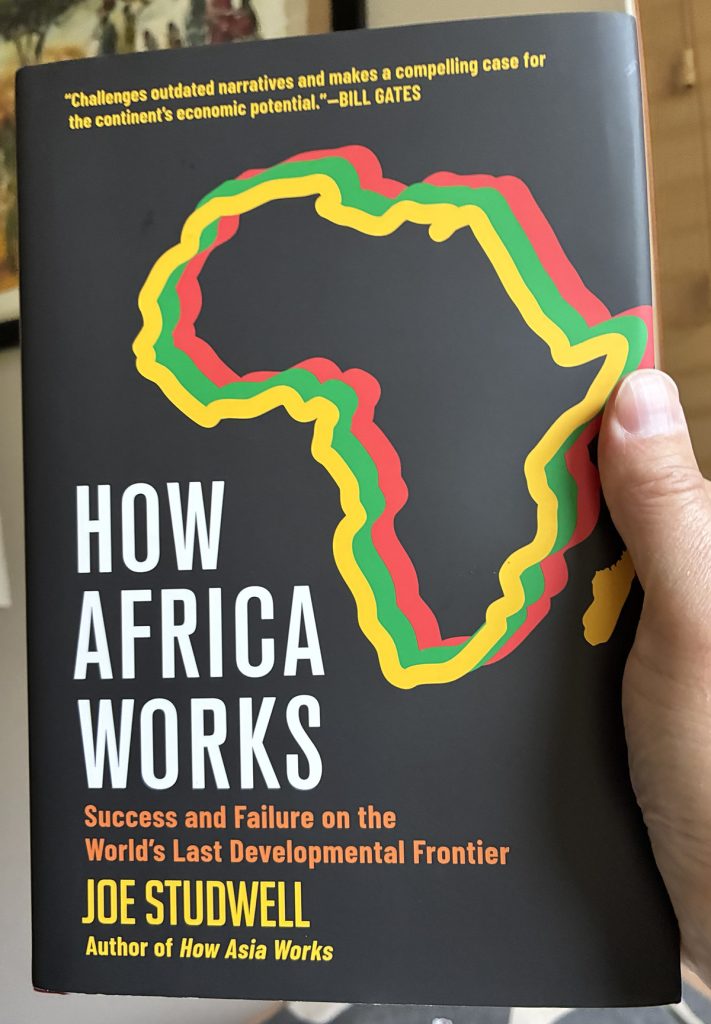
Joe Studwell gives a plausible explanation in his new book, How Africa Works. TL;DR, the answer is population density.
That isn’t a factor that I had ever considered, as Africa today has the fastest-growing cities and the fastest-growing population of any region on Earth. But this is a great example of holding on to a bad assumption. For the decade that I’ve been investing in Africa, I’ve been repeating the common fact (and rhetoric) that the average population is just 19 and due to that, the population will grow from today’s 1.5 billion to 2 billion in the 2040s.
What I failed to do in the last decade was to look backwards to see where the population of Africa had been through the 20th Century. Turns out there were just 227 million Africans in 1960. That year there were over 600 million Chinese and 450 million Indians. The continent of Africa is large enough to fit two Chinas and two Indias with room to spare for Western Europe.
The chart below shows the long-term population trends by continent. Asia has been a relatively densely population region for centuries. Africa, in comparison, has not. The African population was lower due to disease, slavery, and colonization.
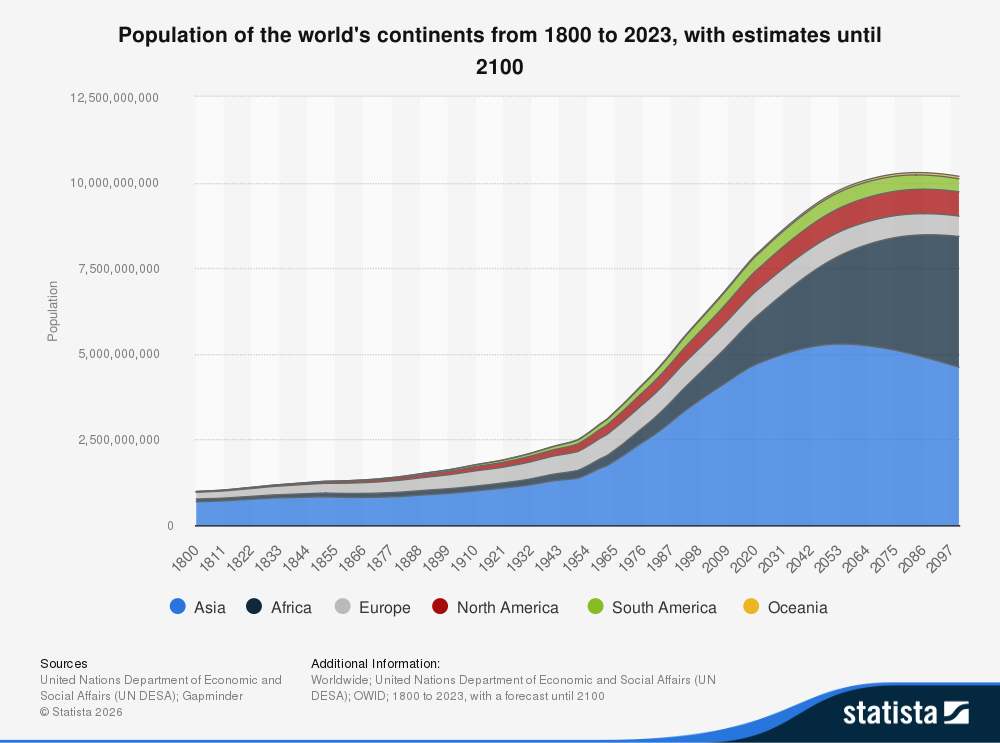
As Studwell points out, that has changed. By the 2000 the population of Africa had grown past 600 million, by then there were 50 cities of 1+ million residents, and by then the countries had a generation of independence to fill in the gaps left by the colonizers, including a huge gap in education.
Back to those cities. In 1960 there were just two cities in all of Africa with 1+ million people. My experience today clearly shows that it is next to impossible to find and hire talented corporate management when companies are based in the smaller cities. Some of those cities are 1-2 million people. That problem existing in Nairobi and Lagos into the 1990s.
Studwell chose 1960 as that is when the Asian Tigers kicked off their economic growth. Africa finally surpassed that benchmark population density in the late 1990s.
I’ve only been visiting Africa since 2016 and thus I’ve not personally seen an unpopulated Africa. My personal experiences are the opposite. I’ve seen Nairobi add hundreds of tall glass buildings, shopping malls, and highways in the last decade. Early this year I lived in Nairobi for two months and felt the energy of the city and saw the chaos of commerce and growth. I saw the same driving across Rwanda in February, and have seen the same in Tanzania and Malawi on prior trips.
Studwell named the book How Africa Works based on his prior book, How Asia Works. Given that the core to why Asia works is population, I’m not surprised it took an expert on Asia to point to population density as the key necessity for a successful economy, but now that it is pointed it, it seems obviously true.