Blog

The Case for Socialism (or not)

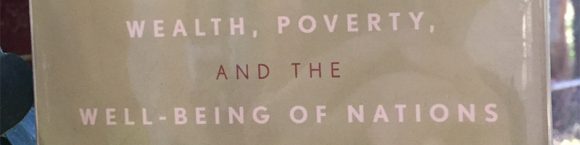
With capital “S” Socialism in the political news, when The Case for Socialism appeared in the new book shelf at my local library, I thought it a good time to see if Alan Maass and Howard Zinn could help me better understand Capitalism and its flaws. Unfortunately, instead this book had me asking my wife (a professor of philosophy and teacher of logic and critical thinking) for the...
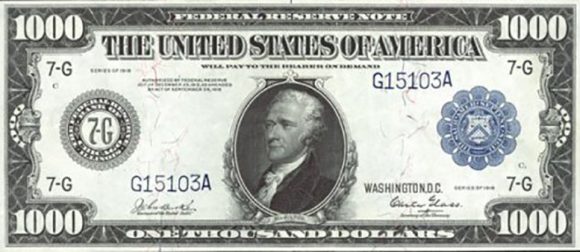

What is money? The answer changes from 1913 to 2019.

Americans today think of “money” as paper that in minted by governments, but this was not always the case. A century ago money (“notes”) still retained their ancient connection to credit. Notes were promises to be redeemed for coin or reliable securities. — America’s Bank (page 200). Today we’ve not lost this underlying concept of credit, but we instead...

America’s Bank

Back to uncovering the history of the modern economy and understanding of how money truly works (see Lords of Finance, War and Gold, Capital in the 21st Century, Debt: The First 5,000 Years, and The Wealth of Nations to get up speed) my latest read is America’s Bank: The Epic Struggle to Create the Federal Reserve. The title sounds a bit dry and the book delivers on that promise, but there...

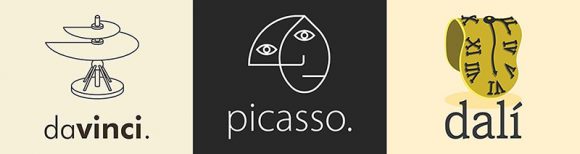
Logos for Eight of History’s Greatest Artists

I came across these logos on my news feed. I love a good logo, and these are great examples of how logos can the most elegant logos can be simple line drawings. In the last seven years I’ve helped (re)brand more than a dozen companies, and have personally created quite a few of their logos. A quick sampling of that effort is in the following video: Does your logo look this good? If not, why...

The Curse of Bigness (i.e. Monopolies)

The idea of anti-trust by government is not yet 130 years old, and it took a decade before President Teddy Roosevelt to put those ideas into action. The last time the U.S. government broke up a monopoly was AT&T in 1982. The Curse of Bigness by Tim Wu gives a quick background on how anti-trust all began, then dives into the key questions: When is big too big?How do we measure big?Is Anti...

Floating to Space

I’ve been a fan of space travel for as long as I can remember. Some of that must come from being born a month before men first walked on the moon. Some from being a child when Star Wars came out and when the first Space Shuttle launched. I’ve been excited in recent years with the efforts of SpaceX and Blue Origin, each showing glimpses of man returning to “outer space”...

Assumed the expert

A hidden assumption in how the world works came up yesterday at a startup pitch event. More than once. It goes like this… When you are the speaker, someone introduces you, and at that moment the audience presumes/assumes that you are an expert in whatever topic you’ve been introduced to present. You remain an expert in the eyes of the audience until either you say something that an...

Success by Ten

I love to uncover hidden assumptions and thus enjoy stories of the early days of some industry,  where all of what we take for granted today didn’t exist.  Modern portfolio theory, mutual funds, and retirement accounts are commonplace today, but were all invented and become popular between the 1960’s and 1990’s. Success by Ten is supposed to be advice for creating a $1...

The Growth Delusion

Fifty years ago, presidential candidate Bobby Kennedy shared these words: Even if we act to erase material poverty, there is another greater task, it is to confront the poverty of satisfaction – purpose and dignity – that afflicts us all.  Too much and for too long, we seemed to have surrendered personal excellence and community values in the mere accumulation of material things.  Our...

Visualizing (Global) Wealth Inequality

Why do I spend my free time trying to understand wealth inequality? 0.7% of the global population (a.k.a. 52 million people) own 50% of everything there is to own. The other 7.5 BILLION people split the other half. 8.5% of the global population (a.k.a. 600 million) own 85% of everything there is to own. The other 7 BILLION people split the other 15%. 70% of the global population (a.k.a. 5.2...

Books

HardcoverThe Next StepThe Next StepThe Next StepThe Next Step The Next StepThe Next StepThe Next Step

Podcast

Fledge

Recent blog posts

Popular blog posts

Categories

Archives