Blog

Measuring the impact of a whole portfolio

It is reasonably easy to measure the impact of any one impact investment.  But as soon as you have two impacts in two different sectors, adding them together into a single value becomes a challenge.  Or was… until the invention of the Pinchot Impact Index.  This index provides that elusive single value, trackable over time just like the financial bottom line. This webinar explains the pros...

You are doing it wrong… investing in startups without waiting for exit

Impact investors face a startup market that has few acquisitions, fewer IPOs, and is filled with entrepreneurs who liken selling their companies to selling out. How can investors earn a reasonable/market-rate return given these realities? This webinar will share a series of alternative investment structures used to create a return on investment without a traditional exit. More webinars at fledge...

Brexit

This blog usually talks about entrepreneurship and startup investing, but the news of the week is the so called “Brexit“, and all the news media want to talk about is the the end of the EU, the end of the UK and the Ends of Days. I felt compelled to write a counter-story.  Or more specifically, to share a few simple ideas that the media is overlooking: Impermanence First and foremost...

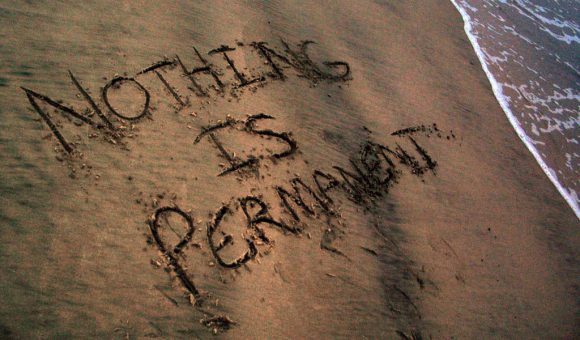
Impermanence (nothing lasts forever)

Nothing lasts forever is misleading. It implies that some things last for long periods of time. Western philosophy craves stability, predictability and tradition.  We want today to be a lot like yesterday.  We get upset when it isn’t. Buddhism has a different view.  Buddha taught that the only constant is change.  That nothing ever stays the same.  That everything is always changing.  This...

Winning AND LOSING the war on (global) poverty

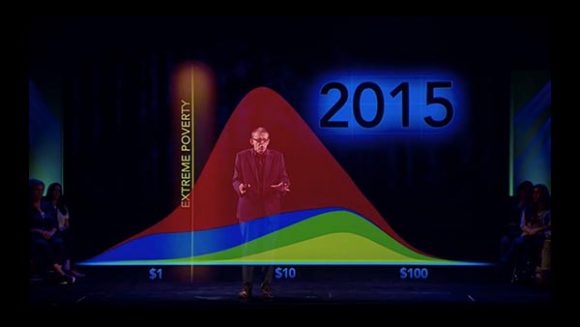
Hans Rosling has a great new talk on global poverty (with even better graphics than his first TED talks).  As always, he tells a great story.  However, in his five minutes he explains what happened over 215 years, but doesn’t provide any analysis.  Most importantly, he doesn’t point out that we are not only winning this war on global poverty, but at the same time losing. The story...

Learning never stops

A key tenant to the Lean Startup philosophy is the repeated cycle of learning.  Launch.  Measure.  Learn.  Repeat. Too often, first-time entrepreneurs think they know the right answer, when in fact they don’t even know the right questions to be asking. For successful established companies, this cycle of learning never stops. Case in point today, when Fledge took a field trip to visit...

What’s wrong with “social enterprise”

Nothing is wrong with the concept of doing good by doing business. What’s wrong are all the connotations and assumptions that come with the term “social enterprise”. Decades ago, all social enterprises were non-profit organizations which earned some revenues from the services they provided, instead of relying 100% on donations. Goodwill is a great example of a traditional social enterprise. Most...

Keeping investors in the loop through email updates

First-time entrepreneurs don’t always understand that outside investments come with a whole new slew of responsibilities and relationships. This is made quite clear by venture capitalists, where the norm is monthly board meetings for the first year or two after an investment closes.  For Angel-backed startups, too often the investors’ expectations for communications are not met by the...

The unreasonable complexity of private investment paperwork

In general, driven by regulations and risks, standard legal contracts grow and grow in complexity until they become unworkable. In the world of private investments, we’re at, if not past, that point. In the U.S. (and most of the developing world), private investments into startups and funds is regulated, allowed only by rich and/or experienced investors. “Private” in contrast to the public...

Everyone has a mission

Sitting here at Impact Hub Seattle, a member of Toniic and Investors Circle, and a teacher at Pinchot, I’m surrounded by thousands of entrepreneurs, investors, philanthropist, and employees who all work for mission-driven organizations, both nonprofit and for-profit. The one commonality across all of that is that everyone has a mission. Back in my days in tech, this wasn’t true, at...

Books

HardcoverThe Next StepThe Next StepThe Next StepThe Next Step The Next StepThe Next StepThe Next Step

Podcast

Fledge

Recent blog posts

Popular blog posts

Categories

Archives