Blog

I built it, told them about it, they came, now what?

In Crossing the Chasm, Geoffrey Moore describes the gap in the adoption curve, where the marketing effort needs to be changed to appeal to the Early Majority, when most of the Early Adopters have been acquired. In talking with one of the older fledglings, I realized that there is a similar gap earlier along the curve, between the initial customers and the bulk of the early adopters. Here’s...
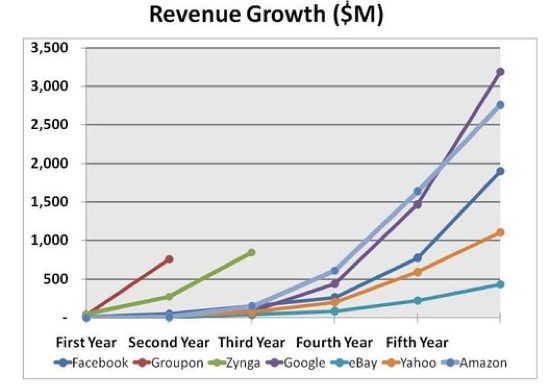
A realistic view of the startup “hockey stick”

Ah… the proverbial hockey stick in a startup’s financial projections.  No one believes it, and yet it must be included in any investor pitch. Why? Two reasons. First and foremost, investors are looking for big opportunities, and if the revenue forecasts grow exponentially, that serves as a proxy to claim a large opportunity exists. Second, investors want their money back (and more), and...

I talked to 40 investors… (and still no funding)

Raising money is a sales process, one in which a very small percentage of customers want what you are selling.  Following on “If you think it… they will fund“, if you actually want that funding, you’ll need to talk with investors. How many investors???  More than most entrepreneurs think. A  conversation with a potential fledgling led to this post.  He was frustrated at...

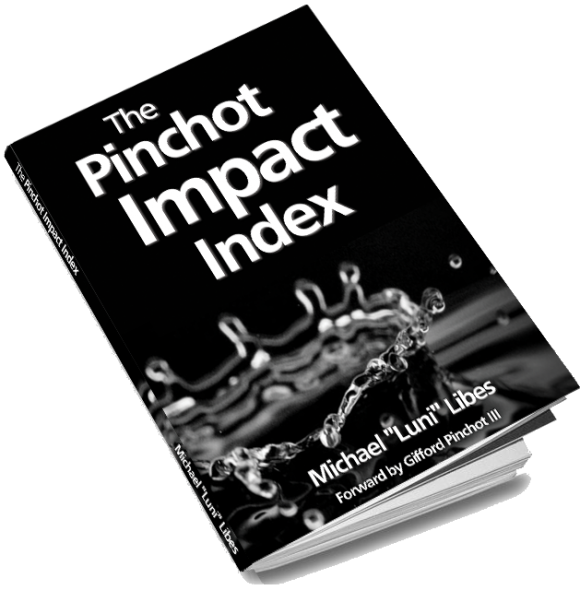
The Pinchot Impact Index

How do you measure, compare and aggregate the impact of organizations that aim to do good in the world? Measure, whether in a nonprofit project or for-profit social enterprise? Compare,  using a universal measure to easily compare a rooftop of solar panels vs. an acre of re-planted forest vs. 500 vaccines vs. jobs vs. food vs. happiness? Aggregate, as in taking the sum of any or all impacts...

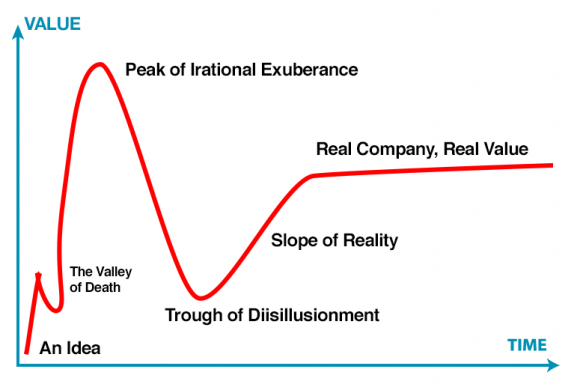
The unintuitive Hype Curve (of startup value)

Why does one startup get picked over another for funding? From the entrepreneurs point of view, the answer to that question is often asked in frustration, as they are turned down by yet-another investor, or passed over by yet-another accelerator program. I feel for those entrepreneurs, as I spend most of my life on their side of the table. However, periodically I step over to the other side...

A startup died today (and we know why)…

A startup died today. (A thousand other startups died today too, but just as we mourn our own family and friends more than strangers, so we mourn the startups we know more than the masses of others.) In mourning, those of us who knew this company started asking the question, “Why?” Why did this company die? On the surface, the reason is simple. The company ran out of money. No money, no payroll...

If you think it… they will fund

If you build it… they will come is an exceedingly common expectation of naïve, first-time entrepreneurs, who have yet to learn the “real world” difficulties of finding and selling to customers. Similarly, for funding first-time startups too often entrepreneurs expect a good idea and 80 page business plan is sufficient for an investor to invest. I call this erroneous expectation, If you think it…...

Thought Different

Sometimes others take the words right out of my mouth…
Last week, blogger Michael S. Malone asked the question, What is “The Purpose of Silicon Valley“?  Seems quite a pertinent question to those of us who have left the world of tech to embrace the world of conscious companies, where our startups are truly changing the world.

Read the whole story on MIT’s Technology Review.

An (obscenely) irrational market

Nobel prizes have been awarded for the idea that the market is rational. Clearly, none of those economists or award judges have ever dealt with early-stage private equity, a.k.a. startup investing. That is the most obscenely irrational, inefficient market that I’ve ever dealt with. In that market, I wear multiple hats, and sit on all sides of the table. I’m a professional investor as at Fledge...

Too many good ideas (for boiling the ocean)

It is application season once again at Fledge, and with it, dozens of repeats of a very common first-time entrepreneurial mistake. A grand vision with multiple components, which as a whole, all implemented, all popular, would solve some problem or simply make people’s lives better. To the ears of the entrepreneur, it sounds wonderful. To anyone who doesn’t review hundreds of business plans each...

Books

HardcoverThe Next StepThe Next StepThe Next StepThe Next Step The Next StepThe Next StepThe Next Step

Podcast

Fledge

Recent blog posts

Popular blog posts

Categories

Archives