Do you remember my journey down the 8-bit computing rabbit hole?
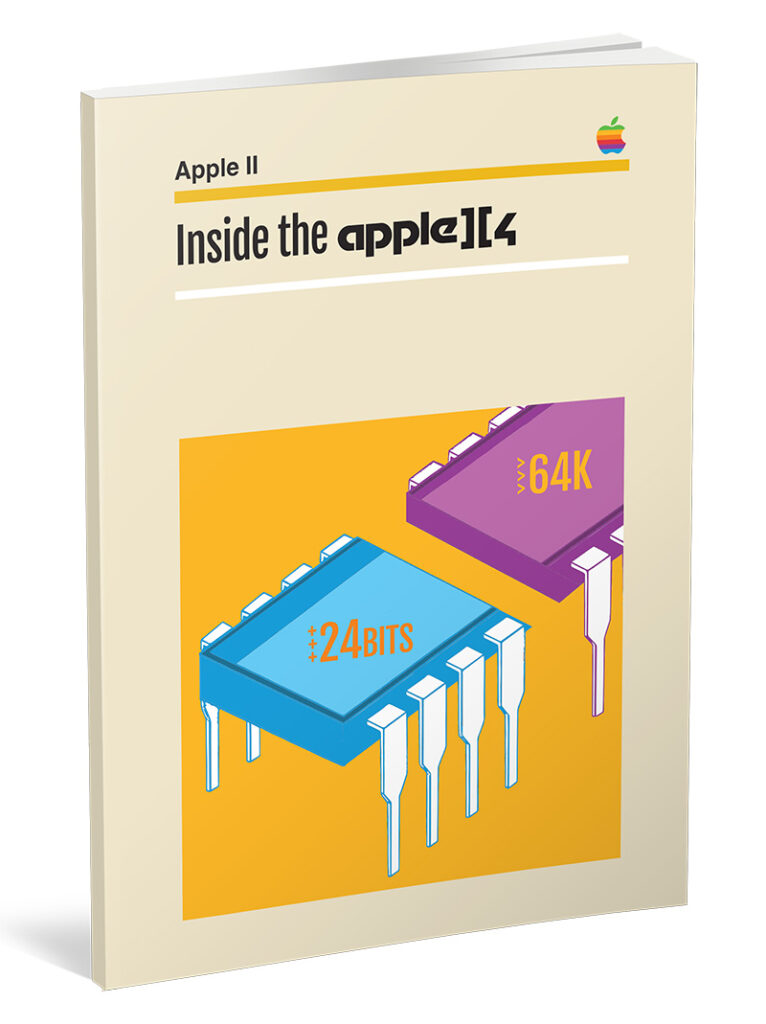
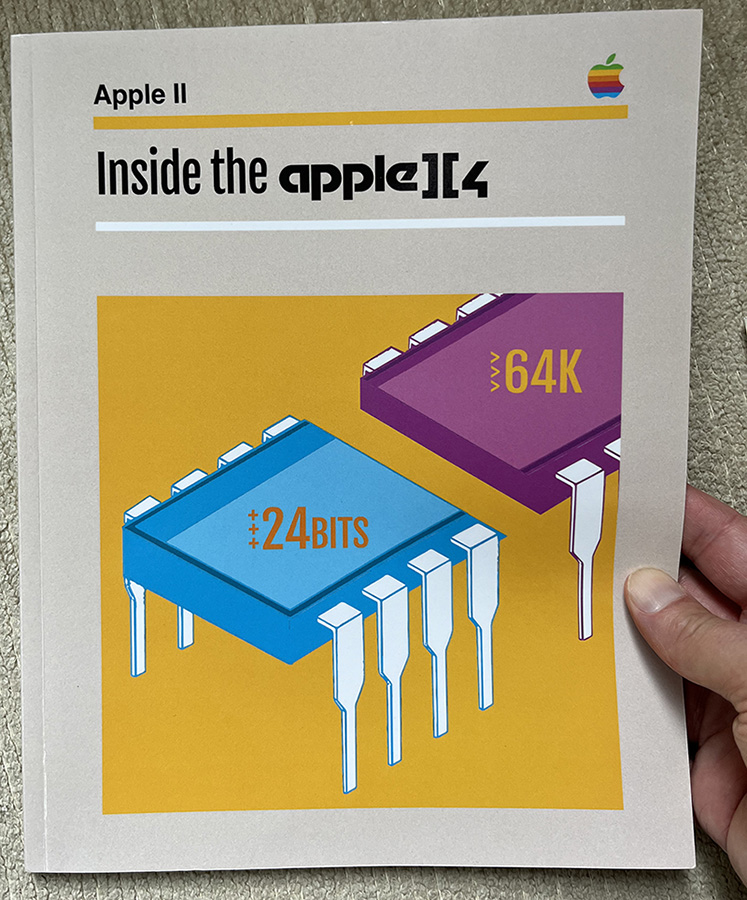
Well… if you are going to do something for fun like designing an upgraded 1976 CPU and writing a 1979 personal computer operating system, you might as well go all the way and write the accompanying book too, in the matching late-1970s style.
I read a lot of fan fiction in my free time, but I don’t recall ever seeing much fan non-fiction. Copying the style of the Inside the ____ book series was fun too, including designing and drawing the cover.
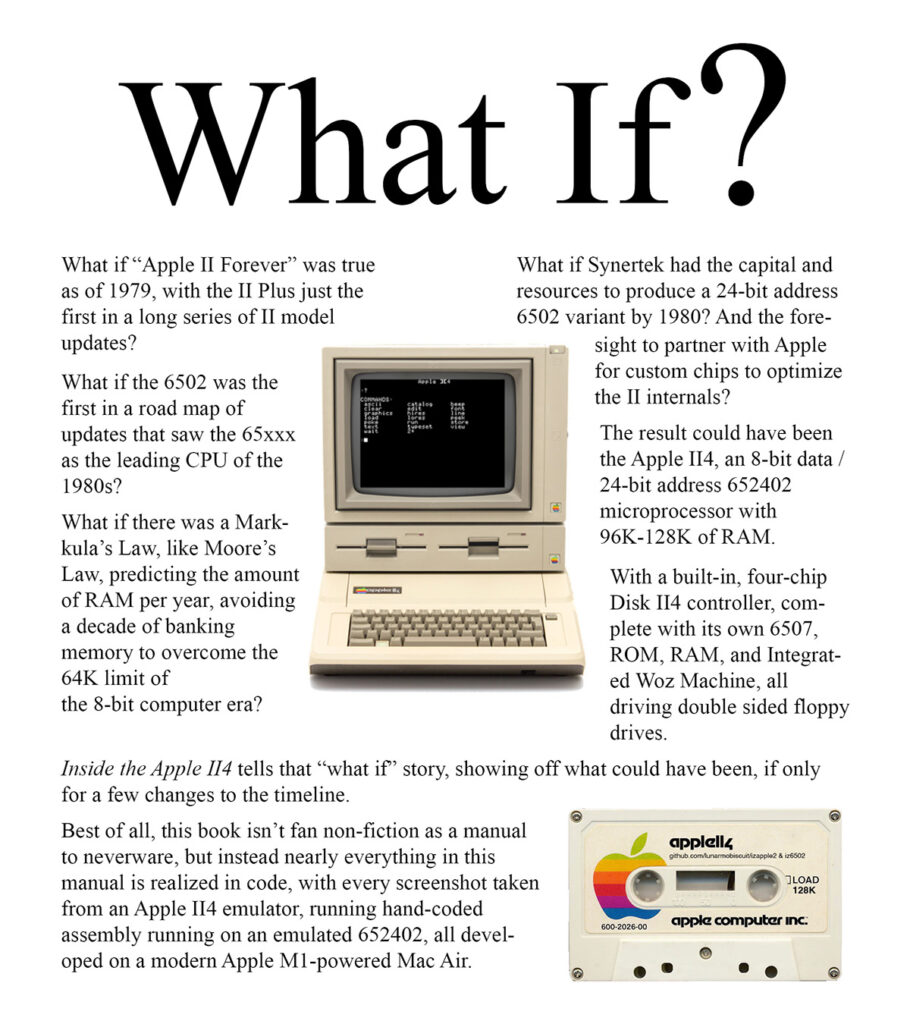
Plus below is the 1970s style Apple advertisement which is included inside the book.
What is the point of all this? I’d say 90% this was a hobby project, giving me something to think about to get my mind off of work, when I needed to get my mind off of work. But the other 10% is the continued lesson that it is important to question assumptions, to question whether there are better solutions, and to keep innovating.
UPDATE: April 2024
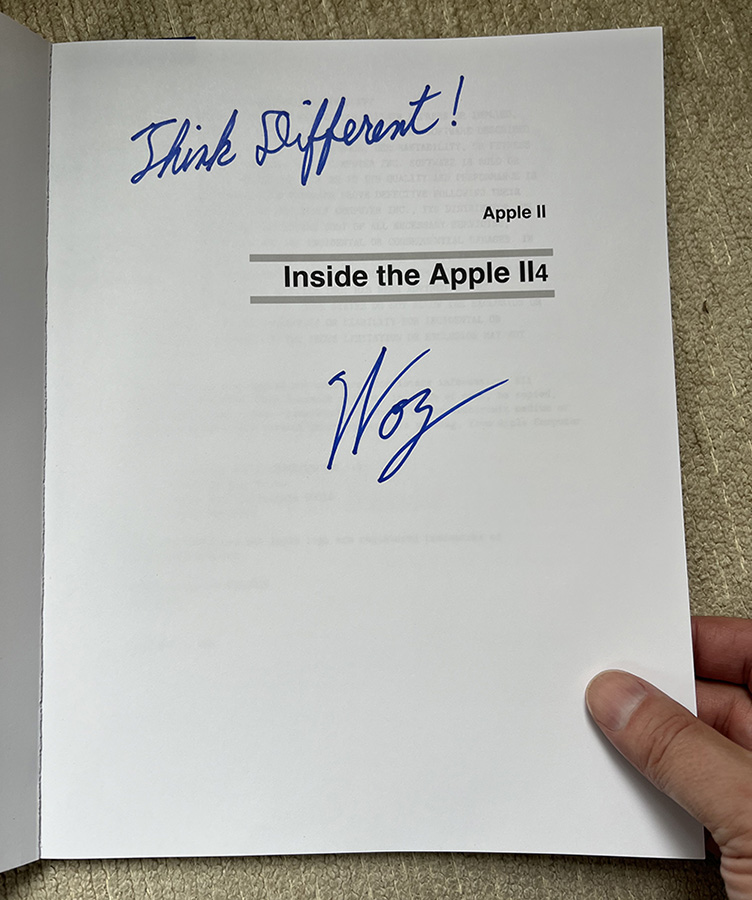
Woz has a signed copy of the book, signed by me, and I have a signed copy of the book too, signed by him. Thanks Woz!
UPDATE: MAY 2024
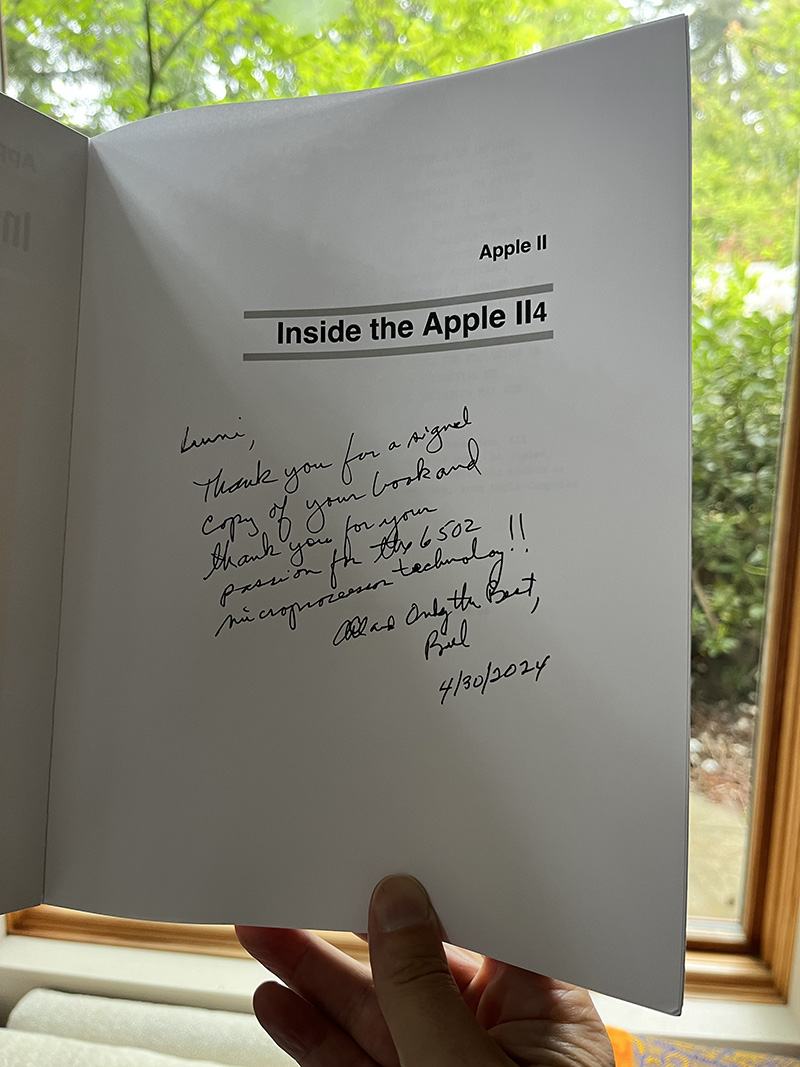
And a second copy of the book signed by Bill Mencsh, one of the fathers of the 6502!
UPDATE: JULY 2026
A few times over the last three years, when my inbox has fewer than 30 unread email and there are no big questions at work that need me to be out of the box, I’ve returned to this rabbit hole to remind myself what I found there. Three years later, there are plenty of details that I had completely forgotten about. Three years later I recall that I wrote the book on a long flight from Seattle to London, and some of the prose was not my best work. And three years I found an updated draft of the book that had never been completed, so I completed it.
Two new ideas were added: The 650024 and the The Cray][
The 650024 is a quick what if that follows the question, what if the 6502 followed along the RISC bandwagon. The new chapter outlines a 6502-inspired 24-bit microprocessor that ends up looking quite a lot like the ARM1. Interesting, but not novel enough that I ever added this to the emulator.
The other what if has Woz sitting next to Seymour Cray on a trans-continental flight. Woz learns about vector processing, Cray gets inspired by the use of Apple computers in businesses, and the result is the Cray ][, running the 65CRAY02 with 256 65V02 vector processors. The world’s first personal supercomputer.
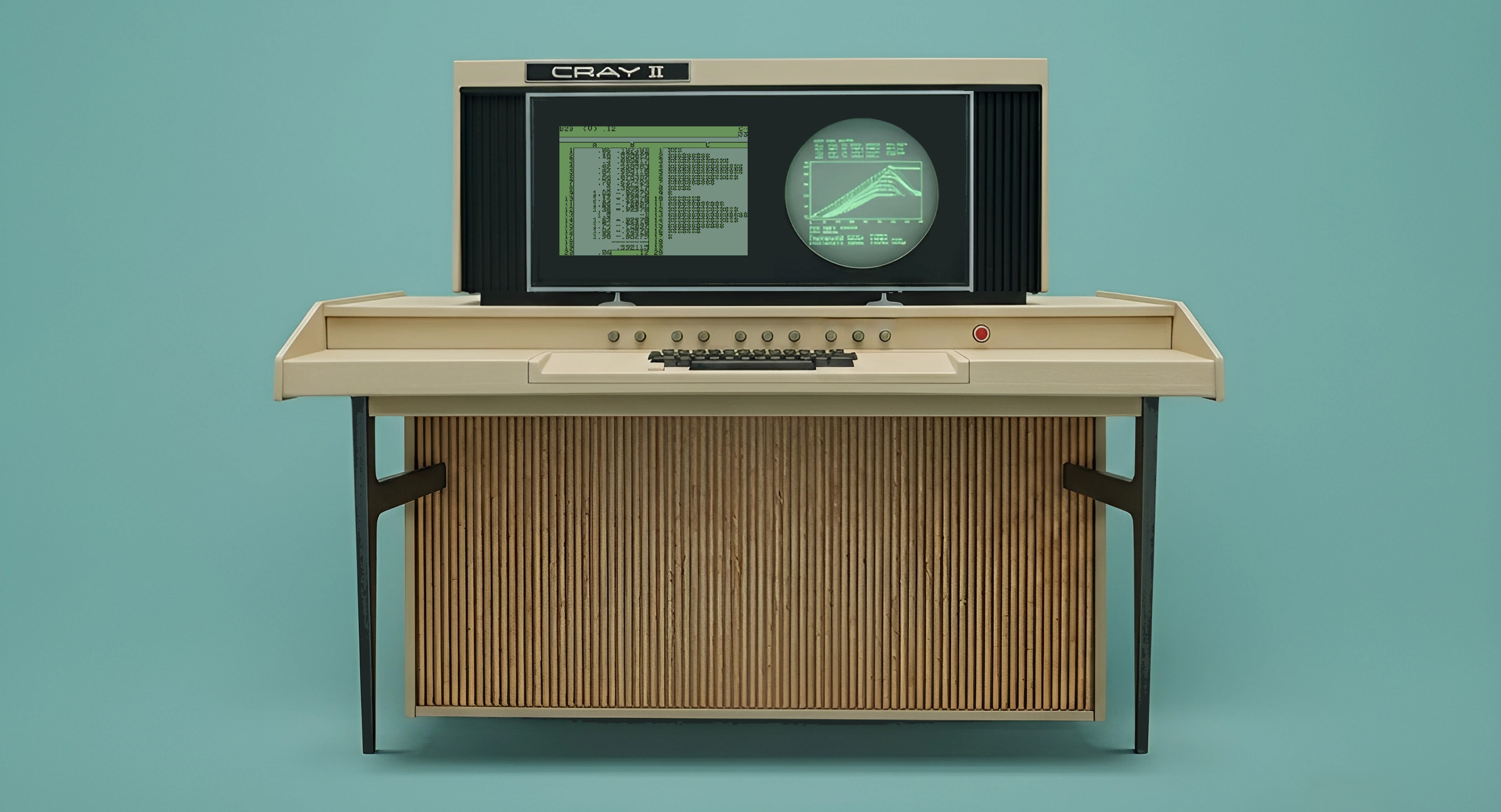
This wouldn’t have competed with the Cray 1 or Cray X-MP for speed, but those cost millions of dollars whereas this design could have cost $5,000-$10,000. A niche that the Sun, HP, and IBM workstations would compete for a decade later with Unix workstations, but where the Cray ][ would have far outstripped their speed for scientific computations.
I had written an emulator for this back in 2023 but had never documented the design until now. That image above is what happens when you mix a CDC 6600 supercomputer (designed by by Seymour Cray) with a 1970s Apple aesthetic. The left screen is running VisiCalc. The circle on the right is a vector display, just like on the CDC 6600.