Blog

Philanthropy is another form of Investment

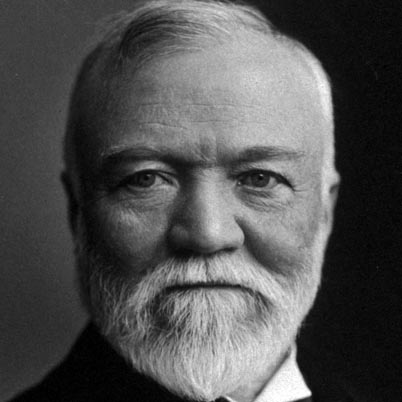
Most people follow a century-old paradigm of philanthropy, popularized by Andrew Carnegie back at the turn of the 20th Century.  Simply put, maximize the return of investments, and give a portion of those earning to charity. In Carnegie’s case, those investments provided him so much wealth, that despite giving away an equivalent of $5 billion in his two decades as philanthropist, enough of his...

Investing without “Exits”

Continuing the discussion of early-stage investing, a common thought circling around the venture capital community is that their the traditional investment model is broken.  In “Investing without Zombies”, I focused on the odd choice of optimizing the system for the least likely case.  But there is a second flaw in that system as well.  Exits. Traditional equity investments are worthless until a...

A hidden cause of Inequality

Income inequality has finally floated to the surface of the news.  It’s nice to see this issue being talked about, but much of what I’m seeing is focused on the symptoms, with solutions like “just pay the workers more”.  What I’d prefer are some opinions on the root causes, purposefully plural as this is not a simple issue. I believe I have uncovered one such hidden cause.  It lies down in the...

Investing without Zombies

The results of an investment (in an early-stage startup) depend not only on the success of that startup, but also on the form of the investment. A sophisticated investor is going to be nodding right now, thinking about liquidation preferences and other common add-on’s to equity investments. But at the same time, those sophisticated investors likely have a majority of their investments in a state...

From idea to startup

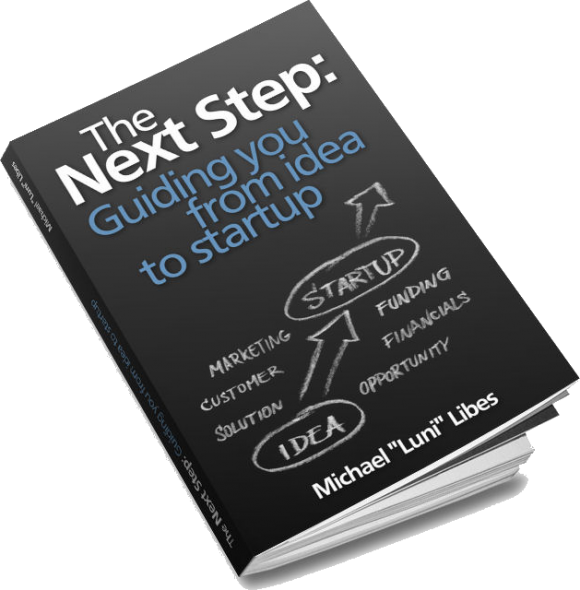
After a decade and a half starting and building startups, I woke up one morning with the desire to help other entrepreneurs.  I thought it might be possible for them not to repeat all the mistakes I’ve made myself, and seen my friends make.  I thought they might like to have a serial entrepreneur to call upon for advice. This epiphany came to me before the latest wave of entrepreneurial...

Assuming Kickstarter at the SEC

Speaking about assumptions, there is a long-held belief by the regulators in Washington D.C. and all 50 States that the masses can’t be trusted with investments.  An assumption dating back from the 1929 stock market crash.  An event now 85 years old, from an era when my grandparents were children. Meanwhile, back in 2009, a small startup in Brooklyn took a small step toward breaking this...

Assuming Assumptions

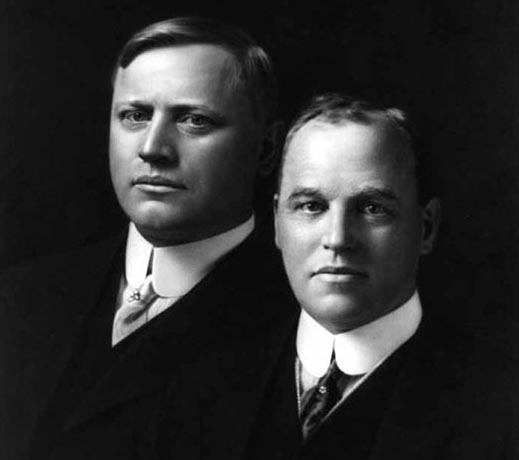
The most interesting ideas come about by questioning assumptions. In science, Copernicus questioned the assumption that the Earth was fixed in the center of the universe.  Newton questioned the assumption that an apply falling and the moon orbiting were related. In government, Madison, Jefferson, Franklin, and friends questioned whether a government needed a king. In business, Henry Ford...

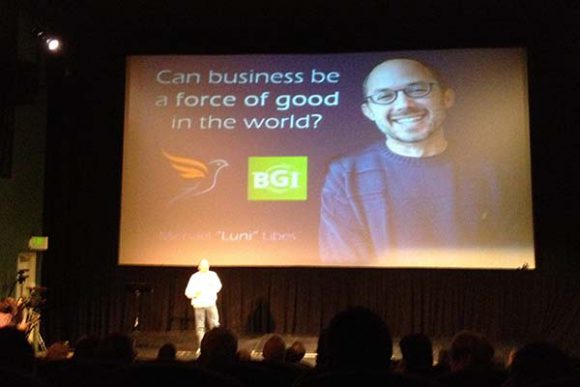
The purpose of business

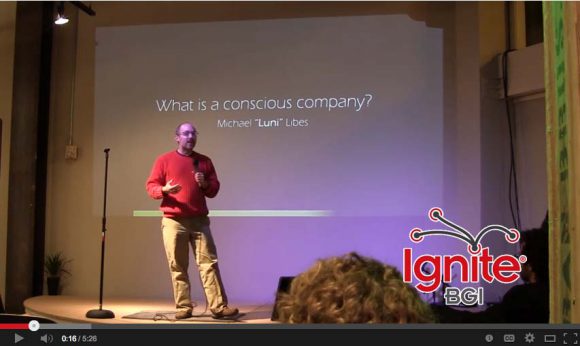
Practice makes better.  The Ignite format looks simple, 20 slides, auto-forwarding every 15 seconds, making for an exactly 5 minute talk.  Hitting the timing of the slide transitions comes down to two strategies.  Either practice, practice, and practice, not skipping or adding any words to the script, or don’t even try, making the slides pure images that don’t need to be in sync with...

Inspire me, but make it quick!

One of the great benefits of the Web is the ease at which we can share ideas.  A decade ago, talks at a conference would be seen by a few dozen to a few thousand people, then never seen again.  Now we can watch and share great ideas from TED and elsewhere, from the comfort of our own homes. One consequence of all this great content is the raising of the bar of quality in the presentations.  The...

Startup != “tech”

I spent the first twenty years of my career as a software entrepreneur.  I started my first software company at age 22, way back in 1992.  That was a few years before the “tech” bubble began brewing, back when the only significant software company in Seattle was Microsoft, and it was still small enough to fit into its first 10 buildings, all on one campus. A lot has changed in the 24 years since...

Books

HardcoverThe Next StepThe Next StepThe Next StepThe Next Step The Next StepThe Next StepThe Next Step

Podcast

Fledge

Recent blog posts

Popular blog posts

Categories

Archives